The Reaper Was Meant to Be Death. The Country Decided It Was Us.
Thirty nine years of awards for twenty one days on air. What the campaign actually measured, what it never measured, and what really changed Australia's outcome on HIV.
Told by Paige Turner · 1 September 2026
HOTTR Podcast · Nico with Paige Turner · 9:11
The advertising industry has been giving itself awards for this thing for thirty nine years. It turns up on every list of the greatest campaigns ever made in this country, usually described as brave, and every so often the man who made it is invited onto a panel to explain how you cut through. I have watched more than one of those panels. Nobody on them has ever been asked the only question that matters, which is what the ad did to the people it was aimed at.
So that is the question. When did an Australian government last run a fear campaign about a health crisis attached to us, and what did it do to the people it was supposed to protect?
It ran for three weeks of a planned six. Then it was pulled. And the thing it is remembered for is not the thing it achieved.
What it actually was
The commercial first screened on 5 April 1987. It was produced for the National Advisory Committee on AIDS, the federal body known as NACAIDS. The National Film and Sound Archive holds it and describes it plainly. Death, as a hooded skeleton, bowls down human pins. The pins are people with AIDS. Men, women, children.
It was created by Siimon Reynolds and narrated by John Stanton. It was commissioned on advice from Bill Bowtell, then an adviser to the federal Health Minister, Neal Blewett. Reported budget for the campaign was around three million dollars, with roughly three hundred thousand of that on production. I flag those as reported figures rather than audited ones.
The narration includes a line stating that at first only gays and intravenous drug users were being killed by AIDS. That sentence is the entire story of this piece and I will come back to it.
The campaign was scheduled to run for six weeks. It was withdrawn after three.
I want to sit on that for a moment, because it is the fact most often left out of the legend and it is the one that changes the reading. This was not a campaign that ran its course and was retired in triumph. The National Film and Sound Archive records that it was pulled early after media backlash and public outcry, and the Archive describes it as one of the most controversial public health campaigns in Australian television history.
Half a campaign. Government money, a national buy, a six-week plan, and somebody decided at the halfway mark that the cost of continuing had exceeded the benefit. That is a judgement made in 1987, by the people responsible, with the evidence in front of them. Every subsequent claim that the campaign was a triumph has to get past the people who stopped it.
What was already happening before it screened
An advertisement does not land in an empty country. It lands in whatever the country already is, and Australia in early 1987 had already given a public demonstration of what it was.
Eve van Grafhorst was born prematurely in 1982 and contracted HIV through blood transfusions given to her at birth. She was almost three when she was diagnosed in 1985. Her family lived at Kincumber on the New South Wales Central Coast. Her diagnosis became public. She was banned from childcare and later permitted back on the condition that she wear a plastic face mask. Neighbours built a fence. Her family left the country for New Zealand in 1986. She died in 1993, aged eleven.
That happened before the Grim Reaper screened. Not because of it. It is here for one reason, which is that anybody defending the campaign on the grounds that Australians did not understand the risk in 1987 needs to explain a fence in Kincumber in 1985.
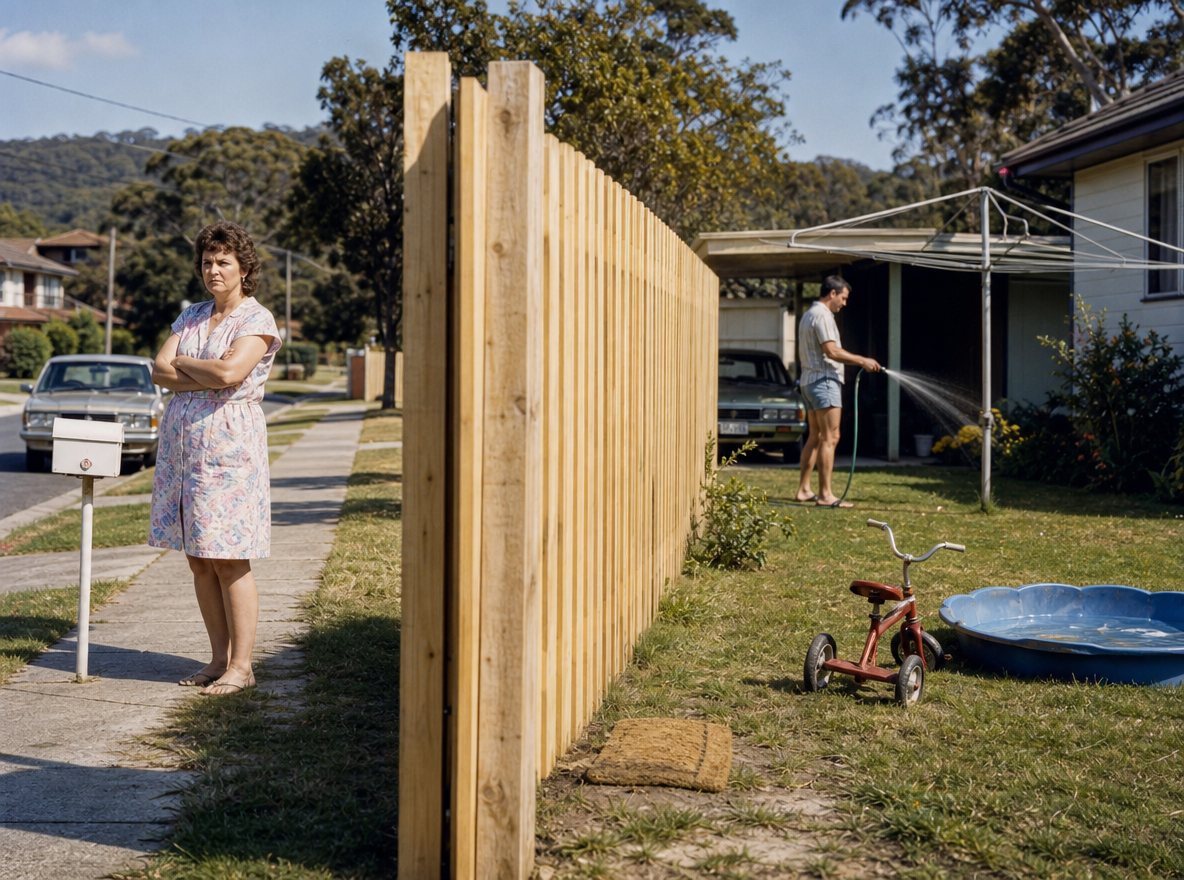
The country did not need to be taught to be frightened. It was already frightened, and it was already acting on it, and what it lacked was accurate information about how the virus actually moved. Keep that in mind for the next section, because it is the section about what the advertisement chose to tell people.
What it did not say
The campaign has been criticised, including by ACON, for a specific omission. It did not carry practical guidance on how HIV was transmitted or how transmission was prevented. There is a condom message at the end. That is the extent of the actionable content in the single most widely seen broadcast on the most urgent public health question in the country.
So the sequencing was this. A skeleton bowls down men, women and children. A voice says that at first only gays and intravenous drug users were being killed. Then, at the end, in the last few seconds, a line about condoms.
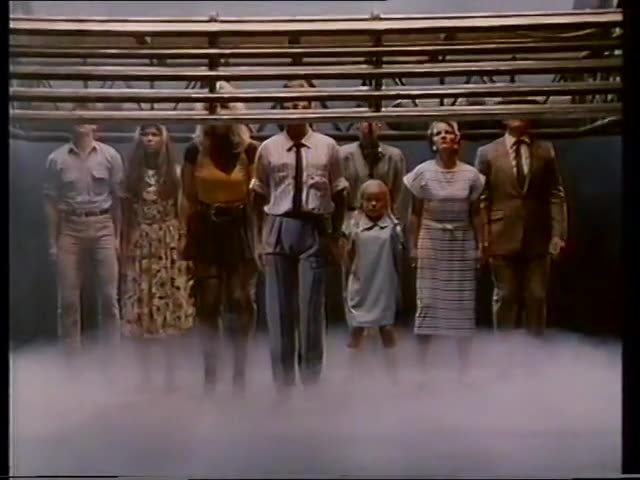
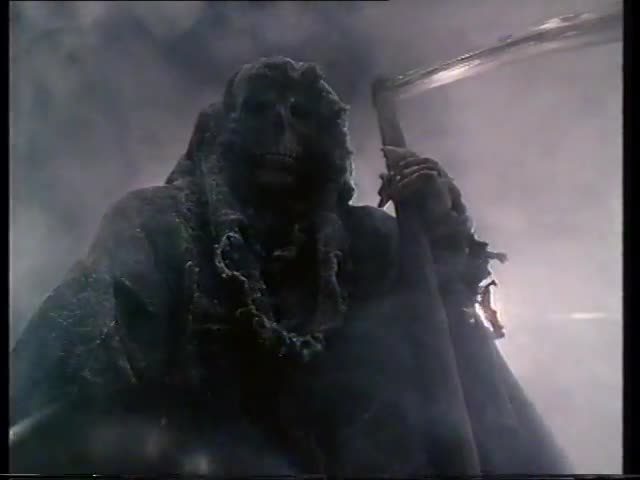

If you were an Australian household in April 1987 with no prior knowledge, the durable information you received from that broadcast was that this thing kills everybody and that it started with two groups of people you could name. That is not a prevention message with a stylistic problem. It is a stigma message with a prevention line stapled to the end of it.
That is my reading, and the material it rests on is the script and the ACON criticism, both above.
The number it is famous for
Calls to AIDS-related hotlines rose by a reported 327 per cent in the first month, measured against the preceding seven months.
That figure is real and I am not going to sneer at it. Making a whole country pick up a telephone about a virus most of them had decided was not their problem is not nothing, and in April 1987 nothing was exactly what most of the country was doing.
But look at what it measures. It measures attention. It does not measure testing. It does not measure condom use. It does not measure transmission. It does not measure whether anybody who called learned anything they could act on. And the historian Marianna Stylianou has made the point that does the most damage to the legend. As Daniel Reeders summed up her argument in Inside Story, we overestimate the effectiveness of the Grim Reaper campaign because it was just so memorable.
Memorability is the metric the advertising industry sells. It is not the metric a health department is buying.
The wider evidence on this kind of campaign is unflattering. Summarising the research literature, fear appeals in experimental settings produce differences of somewhere between ten and thirty per cent in self-reported attitudes and intentions, and in the real world the numbers collapse. Work by Seth Noar and colleagues has found that even the best-designed mass media health interventions average around nine per cent behavioural change a year. That is the ceiling on the entire format, and the Reaper was not built to reach a ceiling. It was built to be unforgettable, and it was.
What it did to us
Here the tone changes and it stays changed.
The line about gays and intravenous drug users did what a line like that always does in a country that is looking for permission. Ron Penny, one of the doctors at the centre of Australia's early AIDS response, put it in a single sentence. The downside was that the Grim Reaper became identified with gay men rather than as the Reaper.
The downside was that the Grim Reaper became identified with gay men rather than as the Reaper.
Ron Penny
That is the mechanism. The figure in the ad was supposed to be death. A large number of Australians decided it was us. Not by misreading, particularly. By reading the script.
Brent Mackie of ACON, the New South Wales HIV organisation, has described what followed from the community side. People avoided testing because of it. For a lot of people in the gay community, seeing that campaign scared them, and they would not go and get tested because of the horrificness of the images. He has also described increased hate, abuse and in some cases increased violence directed at LGBTQ people and particularly at people living with HIV. And this, about what it was like to be positive and watching television in April 1987. It was pretty devastating if you had HIV to be represented like this on TV.
It was pretty devastating if you had HIV to be represented like this on TV.
Brent Mackie, ACON
I want to mark clearly what those statements are. They are testimony from a named person speaking for a named organisation that has been doing this work since 1985, and they are consistent with everything in the historical record about that period. They are not a controlled study.
Which brings me to the gap in this piece, and I would rather tell you about it than paper over it.
What nobody measured
I could not find a contemporaneous, methodologically serious evaluation of what the Grim Reaper campaign did to stigma. Not one.
There is a hotline figure. There is a great deal of subsequent commentary. There is testimony from clinicians and from community organisations, consistent, repeated, and given by people in a position to know. What there is not, as far as I can establish, is a study designed in 1987 to measure whether a national broadcast identifying two named groups as the first to die made life materially more dangerous for the people in those groups.
Nobody built that instrument, because in 1987 the harm to us was not the outcome anybody was commissioned to measure. Which is, if you think about it for a second, the same problem the ad had.
So the honest position is this. The benefit is a soft number that measures attention. The harm is strong, consistent, named testimony that was never quantified because no one thought to quantify it. Anybody who tells you the ledger comes out positive is not reading a ledger. They are reading a showreel.
What actually worked
This is the part the panels never get to, and it is the genuinely useful history.
Australia's outcome on HIV was, by international comparison, extraordinarily good. The peer-reviewed account of how that happened does not put a television commercial at the centre of it. It credits immediate action by the affected communities themselves, gay men, people who inject drugs, sex workers and Aboriginal and Torres Strait Islander people, who drove the education and prevention messages and changed community practice around safe sex and safe injecting. It credits collaborative partnerships between those communities, community organisations, clinicians, researchers and governments. And it credits a government that understood its own role as an enabler, harnessing that mobilisation rather than replacing it.
NACAIDS itself ran from 1984 to 2003. Nineteen years of committee work, funding, partnership and unglamorous programme delivery. The ad ran for twenty one days.
Guess which one gets the retrospective.

The academic account calls the underlying method a social public health approach, and describes the early policy success as the product of advocacy, the mobilisation of affected communities, and a government unafraid to make bold policy decisions. Read that list in order. The community moved first. The government's contribution was to fund it, legislate around it and get out of the way, which is a genuinely brave thing for a health minister to do and is nothing at all like commissioning a skeleton.
The reason this distinction is worth two thousand words is that the two models produce opposite instructions. If the Reaper worked, the lesson is that you frighten people from the top. If the partnership worked, the lesson is that you fund the people who are already doing it and let them speak in their own register to their own community. Australia ran both at once and only one of them is on the showreel.
The five things, separated
Established fact. First screened 5 April 1987. Produced for NACAIDS. Depicts death bowling human pins. Created by Siimon Reynolds, narrated by John Stanton. Scheduled for six weeks, withdrawn after three. Held and described by the National Film and Sound Archive.
Reported, and I am labelling it. The three million dollar campaign budget and roughly three hundred thousand dollar production cost. The 327 per cent rise in hotline calls. Bowtell's role in advising that it be commissioned.
Named testimony, not a finding. Penny on the Reaper being identified with gay men. Mackie on avoided testing, on abuse and violence, and on what it felt like to be positive and see it broadcast.
Historical interpretation, made by historians and by me. That the campaign is remembered as effective principally because it is remembered at all.
My interpretation, sitting on the material above. The script named two groups as the first to die and then asked the country to be frightened. You cannot do both of those things in one commercial and then be surprised about where the fear lands. That is not a subtle failure of execution. It is what the brief was.
Unknown. Whether any of it changed transmission. Whether the three weeks it did run did more damage than the three it did not. How many people did not get tested in 1987 and 1988 because of it, and what that cost them.
What now
Every few years somebody proposes a shock campaign about a health issue affecting this community, and the Reaper gets held up as the precedent that proves it works.
It is the precedent that proves the opposite, and the file supports that. A campaign built to be unforgettable was pulled at half its run, produced one soft number and a large volume of documented harm to the people it named, while the thing that actually shifted Australia's outcome was nineteen years of community-led work that has never had a single award ceremony.
The reason to know this is not so you can win an argument about advertising. It is so that when the next one is proposed, somebody in the room can put a date on the table.
Thirty nine years of awards for twenty one days on air. The pins are still in the archive. So is everyone who was told they were one.
Correction, 27 September 2026: an earlier version showed a summary of Marianna Stylianou's argument, written by Daniel Reeders in Inside Story, as a direct quote from her.